Just Because It’s “Outdated” Doesn’t Mean It Has to Go
I was walking through a client’s home during a consultation recently when we started talking about her kitchen. She pointed to the raised bar and said something along the lines of, “I know this is outdated, so we probably need to get rid of it.”
My first question was not what she wanted to replace it with.
I asked her, “But do you use it?” Her answer was immediate. Yes. All the time. She actually loved it and hated the thought of getting rid of it. So I looked at her and said, “Then why are we getting rid of it?” It was such a simple conversation, but I have thought about it several times since because I think it says so much about the way we approach our homes today.
We are constantly being told what is in, what is out, what makes a home look dated, and what apparently needs to disappear immediately if we ever want anyone on the internet to approve of our kitchen. Raised bars are out. Certain cabinet colors are out. Open concept is in, then it is out, then walls are back in. Dining rooms are supposedly disappearing. Bathtubs are unnecessary until suddenly everyone wants a beautiful soaking tub again.
It is a lot.
And somewhere in all of that noise, I think we have started confusing the word “updated” with the word “better.” Those two things are not always the same.
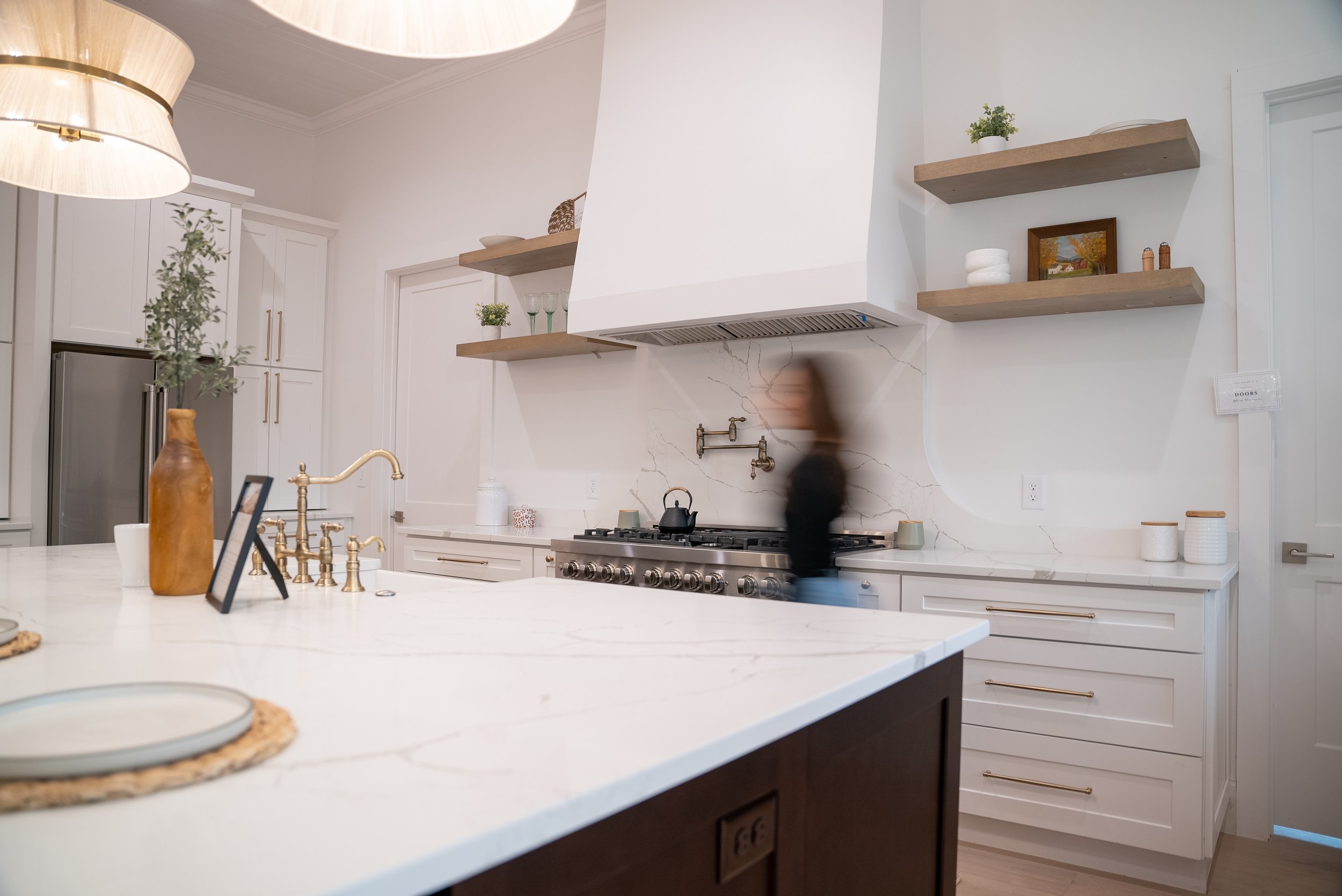
As an interior designer, I absolutely pay attention to what is happening in the design industry. I love seeing new materials come onto the market. I love discovering new ways of approaching cabinetry, furnishings, lighting, and architectural details. There are trends that I think move design forward in really beautiful ways. This is an important part of being an interior designer and why I attend markets like the Kitchen and Bath Industry Show and High Point Market every year.
But I don't believe your home needs to be a checklist of everything that is currently popular.
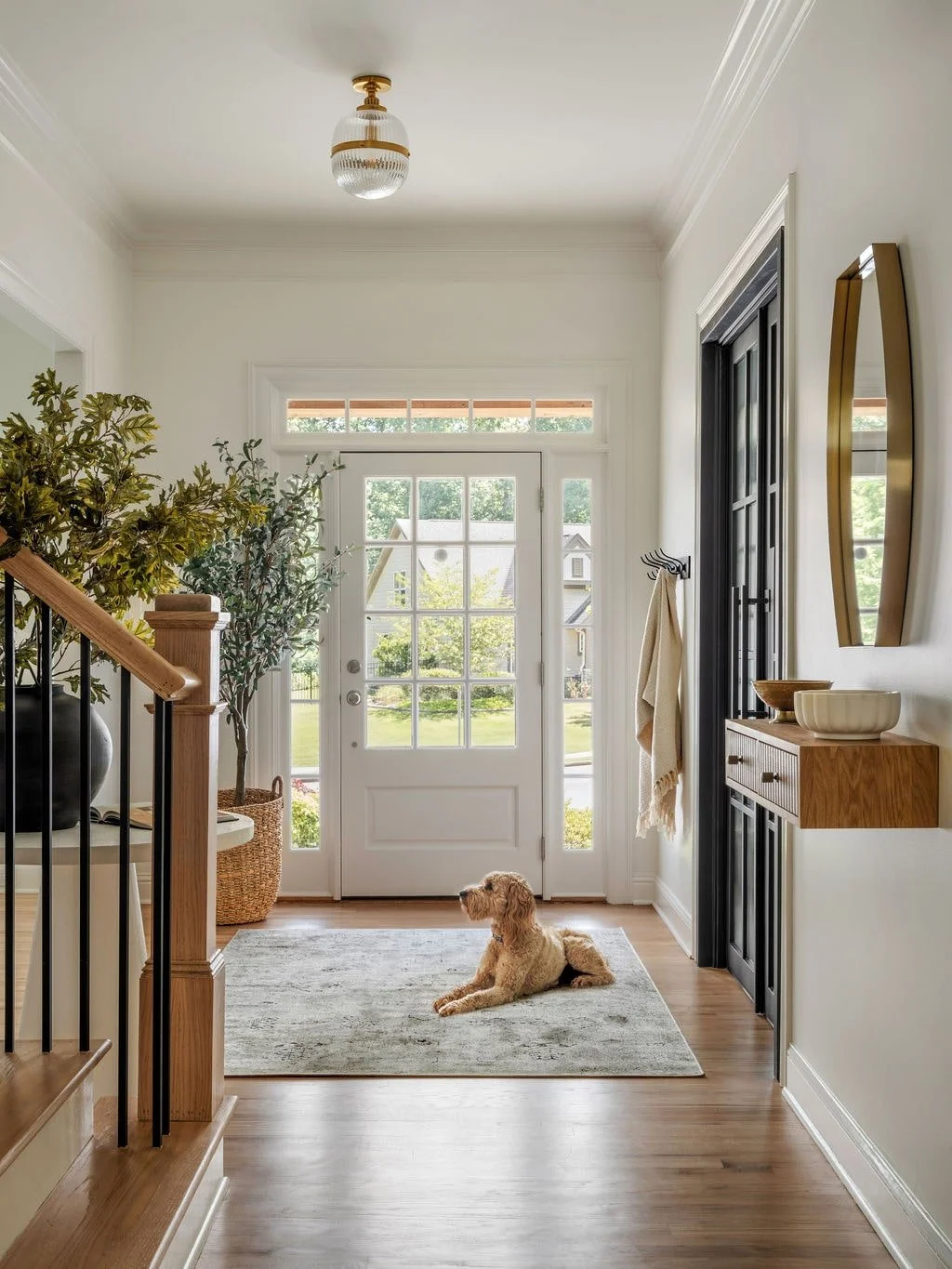
I care much more about whether it works for you.
Whatever it is, the raised kitchen bar is such a good example. Could we redesign the kitchen without it? Absolutely. Could we create something that photographs beautifully and feels more current? Of course. But if my client sits there every morning, uses it throughout the day, loves the separation it creates, and genuinely does not want to lose it, removing it simply because someone decided raised bars are “out” doesn't make the design better.
In fact, I would argue that ignoring how she actually lives would make it worse.
This is something we talk about quite a bit within our interior design studio here in Northeast Georgia. Before I start changing something in a client's home, I want to understand why it is there, how they use it, and whether it is actually creating a problem.
Sometimes the answer is yes.
Something really isn't functioning anymore. A kitchen layout may make cooking unnecessarily difficult. A bathroom may no longer support the family using it. A room may be filled with furniture but still have nowhere comfortable for everyone to gather. There are absolutely times when rethinking something completely is the right answer.
But sometimes the answer is, “Actually, we really like this.”
Great. Let's keep it. Maybe we update the materials around it. Maybe we refine the details. Maybe we find a way to make an existing feature feel more intentional within the new design rather than ripping it out and starting over. Renovating a home does not mean everything old has to become new. And I think there is something really freeing about that.
The same philosophy applies beyond kitchens. Maybe you actually use your formal dining room every Sunday and have no interest in turning it into something else. Keep your dining room. Maybe your family prefers separate rooms instead of one enormous open floor plan. Wonderful. Maybe you have a bathtub everyone keeps telling you to remove, but you use it four nights a week. Please do not let Instagram take away your bathtub. Your home is allowed to work differently than someone else's.
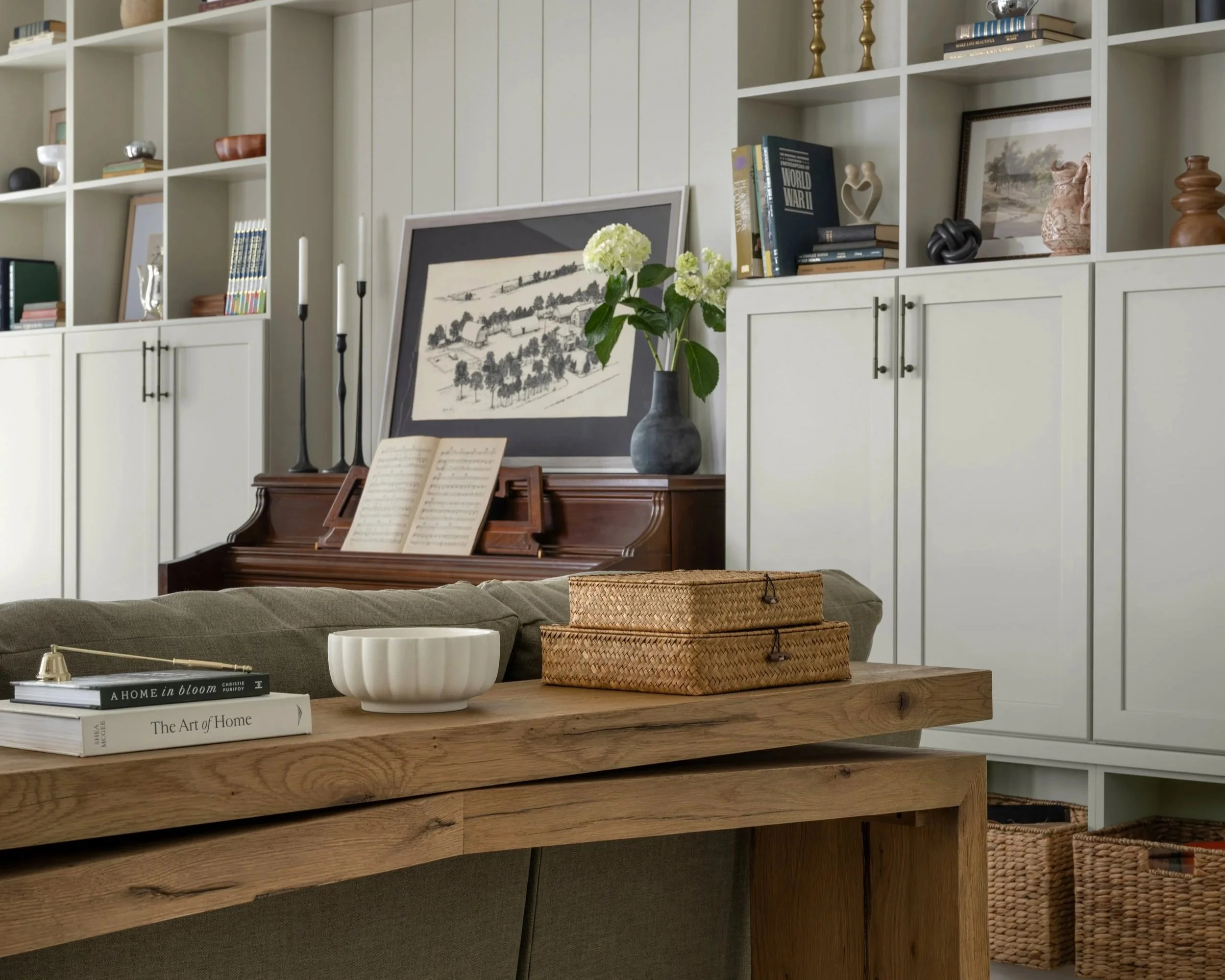
I see the opposite happen, too.
Sometimes homeowners feel like they have to keep a room a certain way simply because that is what the room has always been. The dining room has to remain a dining room. The formal living room needs to have a sofa and two chairs even though nobody has sat in there since 2019. There “should” be two sofas in the family room because that is what they have seen somewhere else.
Whenever I hear the word should during a design conversation, I usually want to dig a little deeper. Who says? If your family needs something different, let's design something different.
That is one of the things I love most about family focused interior design. We are not designing for an imaginary family or for the person who might buy your house twenty years from now. We are looking at your routines, your kids, your pets, the way you entertain, where everyone gathers, what drives you crazy about the house now, and even the little things you would genuinely miss if we took them away.
Those answers influence the design just as much as the beautiful materials do.
And I think this matters even more when you are making a significant investment in a renovation or new build. There is no prize for spending money to remove something that works perfectly well for your family simply because it is no longer considered current. I would much rather help a client thoughtfully allocate that investment toward the areas that will actually improve the way they experience their home.
Of course, there is a balance. I am still going to tell you when I think something is fighting against the overall design. I am still going to bring ideas to the table that you may not have considered. Part of hiring an interior designer is having someone willing to give you a professional opinion, not someone who simply agrees with every idea.
But my job is also to listen.
“Sometimes the best design decision is changing something completely. And sometimes it is realizing we never needed to change it in the first place.”
At the heart of our studio, that is really what thoughtful design means to me. I want to create beautiful homes, of course, but I want them to be beautiful because they belong to the people living there. Your home should support your routines, make everyday life easier, welcome the people you love, and give you a sense of belonging when you walk through the door.
So if there is something in your home you love but you have been convinced is “outdated,” maybe ask yourself one question before you add it to the demolition list.
Does it work for us?
If the answer is yes, maybe it deserves to stay.
If you are considering a renovation, new build, or furnishing project and want a home that feels thoughtfully designed around the way your family actually lives, we would love to start that conversation with you. At Effortless Designs, our goal is never to simply make your home look more current. It is to help you create a home that feels distinctly yours and works beautifully for the life happening inside it.