

The Top Five Countertop Materials Recommended for New Builds
When I work with clients on new builds or large-scale renovations, one of the most exciting design decisions we make is choosing the right countertop material. It’s about finding the balance between what looks beautiful and how the surface will live with you, stand up to daily life, and support the overall tone of your home. Countertops are a major design element in kitchens and baths, and the right selection can elevate both the aesthetic and functionality of a space.
Here are the five countertop materials I recommend most often for our luxury new build homes along with the pros and cons I walk clients through when we’re making those decisions together.
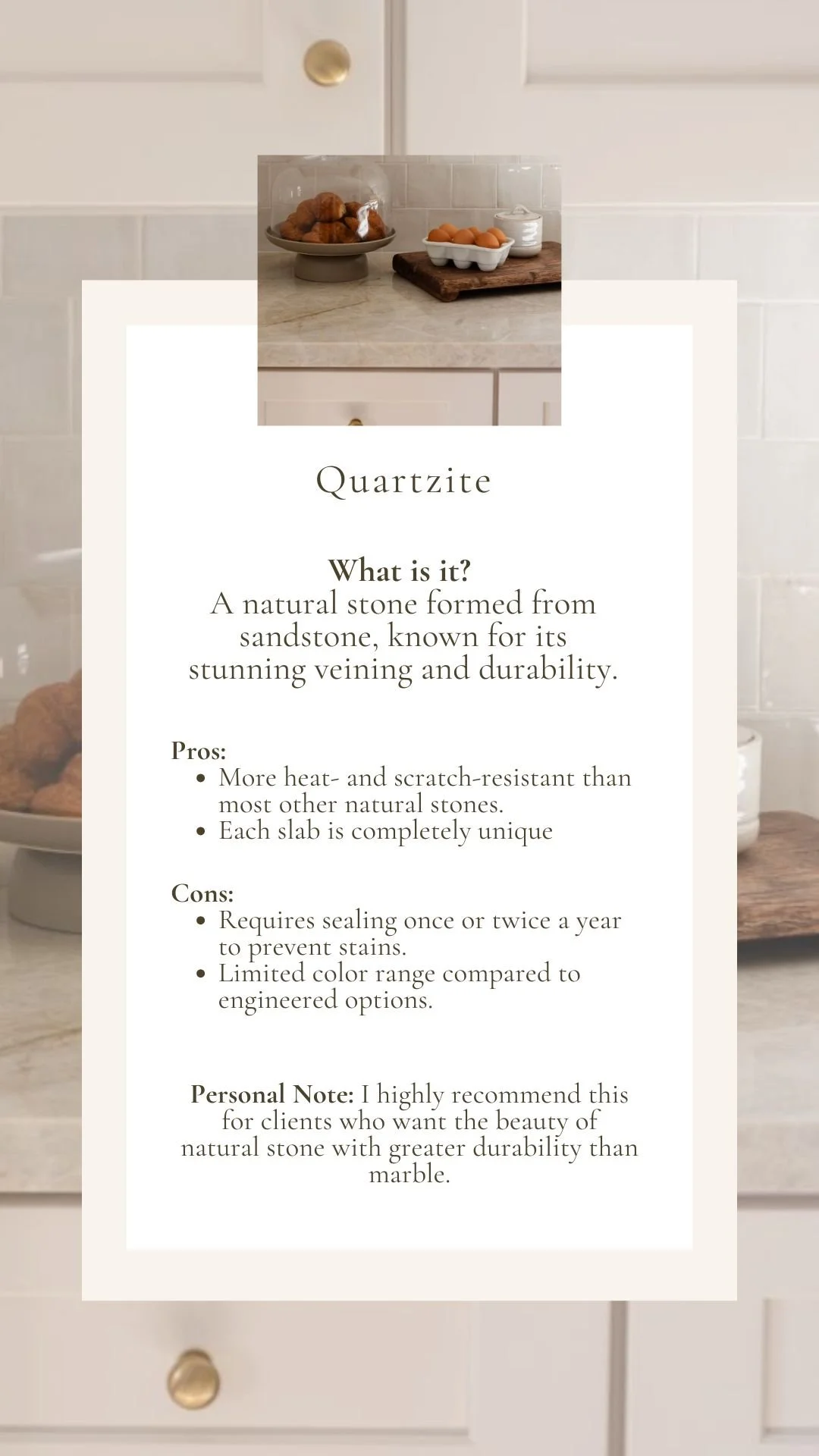
Quartzite
Quartzite is one of my go-to choices for clients who want the beauty of natural stone with superior durability. It’s a natural material formed from sandstone, and it offers some of the most stunning veining you'll find because no two slabs are alike, which is part of the appeal.
When I use quartzite in our projects, I know we’re getting a surface that’s highly scratch- and heat-resistant, more so than many other natural stones. That makes it ideal for busy kitchens where beauty and function both matter. However, it does require sealing once or twice a year to prevent staining, and the natural color palette is more limited compared to engineered materials. Still, if you're drawn to the organic movement of marble but want something that will wear better over time, this is an excellent choice.
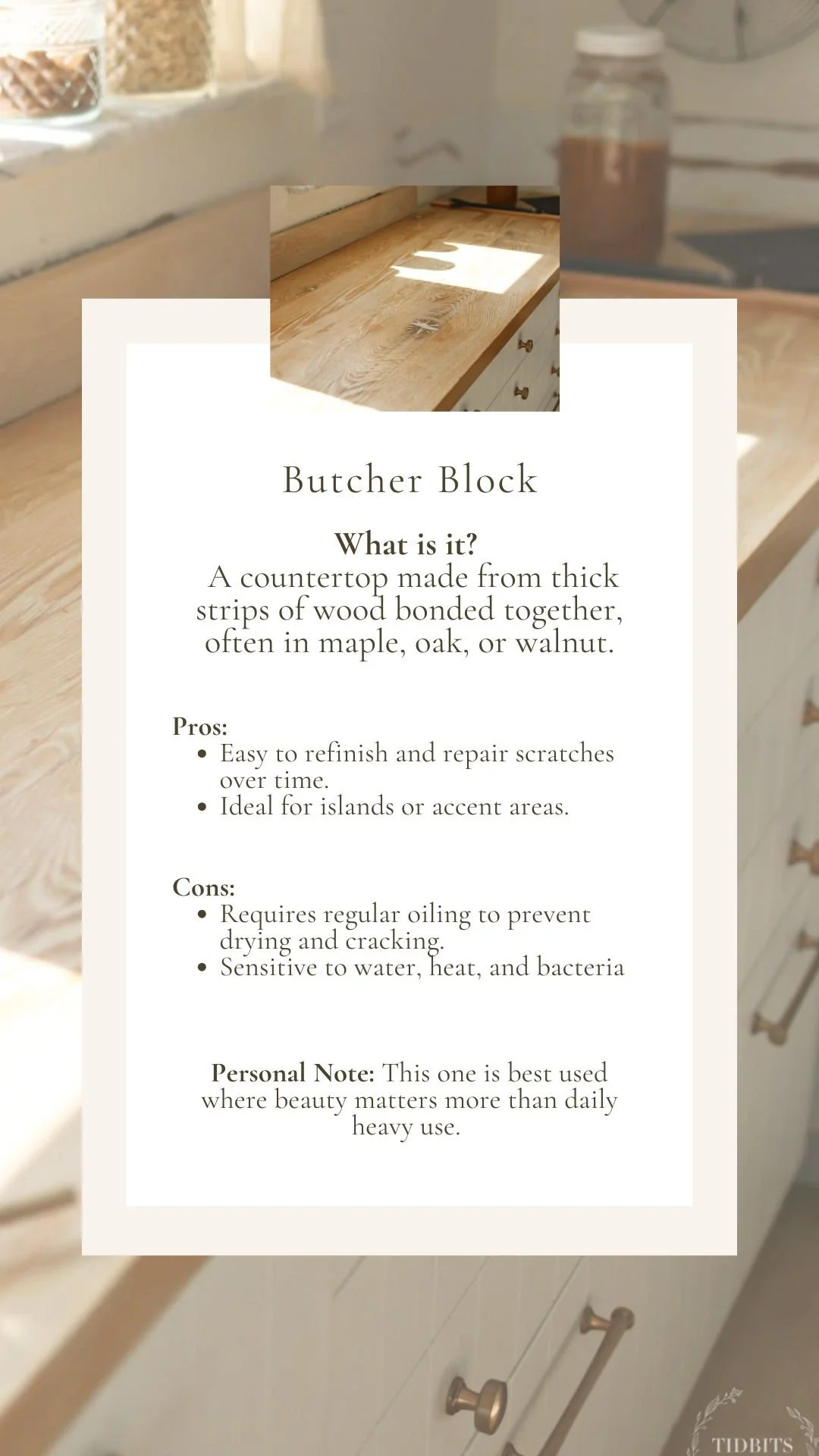
2. Butcher Block
Butcher block is not something I specify often as a full kitchen surface, but it can be incredibly beautiful in the right context. Think kitchen islands, prep stations, or accent areas where we want to bring in some natural warmth and texture.
Made from strips of hardwood (like maple, oak, or walnut), butcher block is easy to refinish and can actually improve in character over time. The tradeoff? It does require regular oiling and maintenance, and it’s not as durable when it comes to water, heat, and bacteria. I usually recommend it in spots where beauty takes priority over hard-wearing functionality like show kitchens or secondary prep spaces where daily use is more gentle.
3. Soapstone
I’ve always had a soft spot for soapstone. It has this beautifully matte, velvety texture and comes in deep, rich gray or charcoal tones that work wonderfully in modern or moody kitchens. Because it’s naturally non-porous, it resists stains and bacteria without needing to be sealed, and it handles heat beautifully so you can place a hot pan directly on it without worry.
That said, soapstone is a softer material and can scratch or dent with heavy use. In my experience, clients who love soapstone also love the lived-in, slightly worn look it develops over time. If you're after a surface that feels organic, grounded, and quietly luxurious, this might be the one.
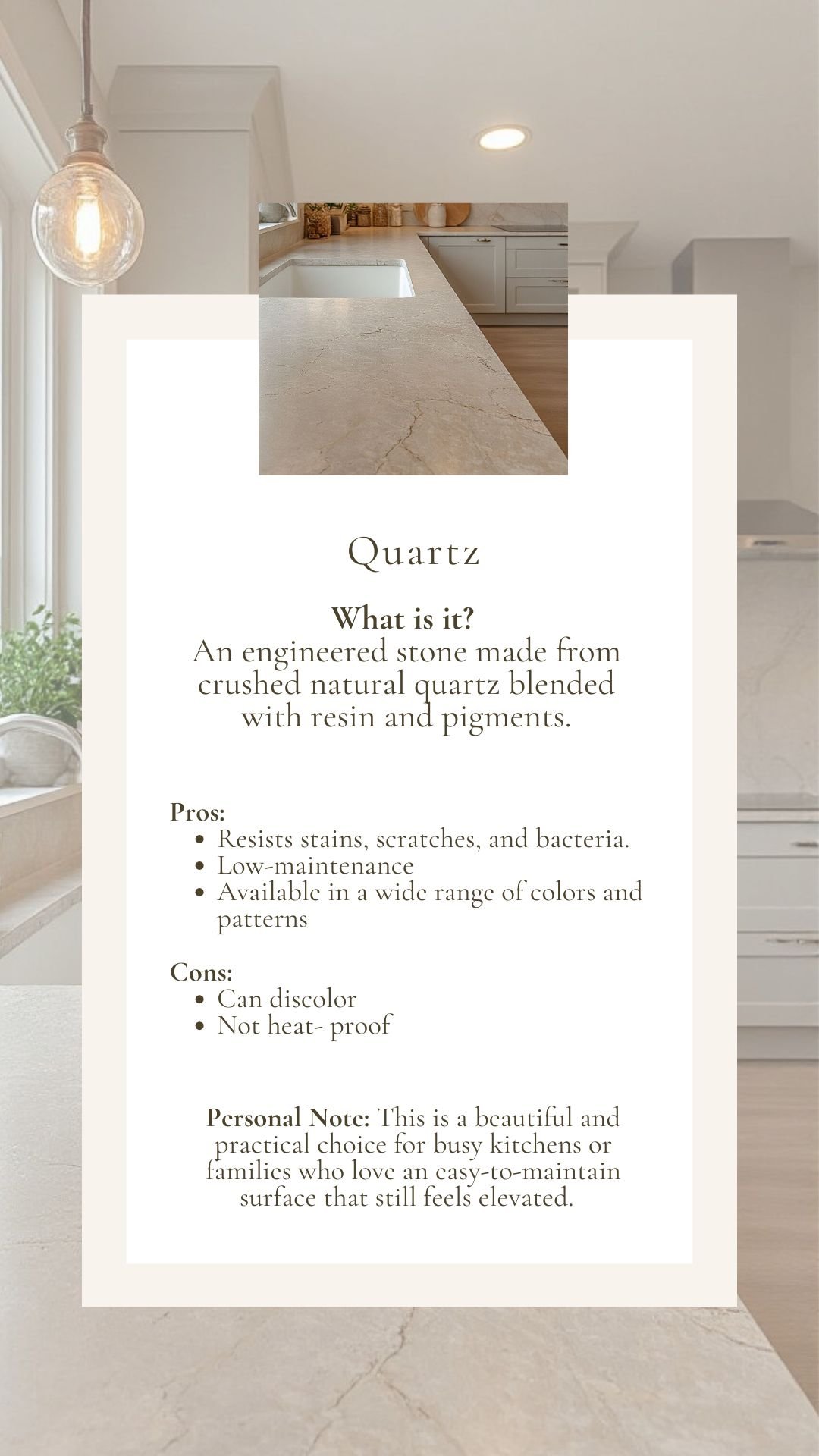
4. Quartz
For our clients who prioritize low-maintenance living but still want an elevated aesthetic, quartz is a strong contender. It’s an engineered stone made from crushed natural quartz mixed with resin and pigments, which means it offers exceptional consistency and durability. Cambria is a favorite of mine that I recommend for quartz specifically.
Quartz resists stains, scratches, and bacteria, making it ideal for busy households or clients who want a surface that just works. It also comes in a wide range of colors and patterns, from marble lookalikes to concrete-inspired textures. Just note that it’s not heat-proof, and discoloration can occur with prolonged exposure to high temps. That’s why I typically avoid using it near ranges or cooktops unless we have proper protection built in.

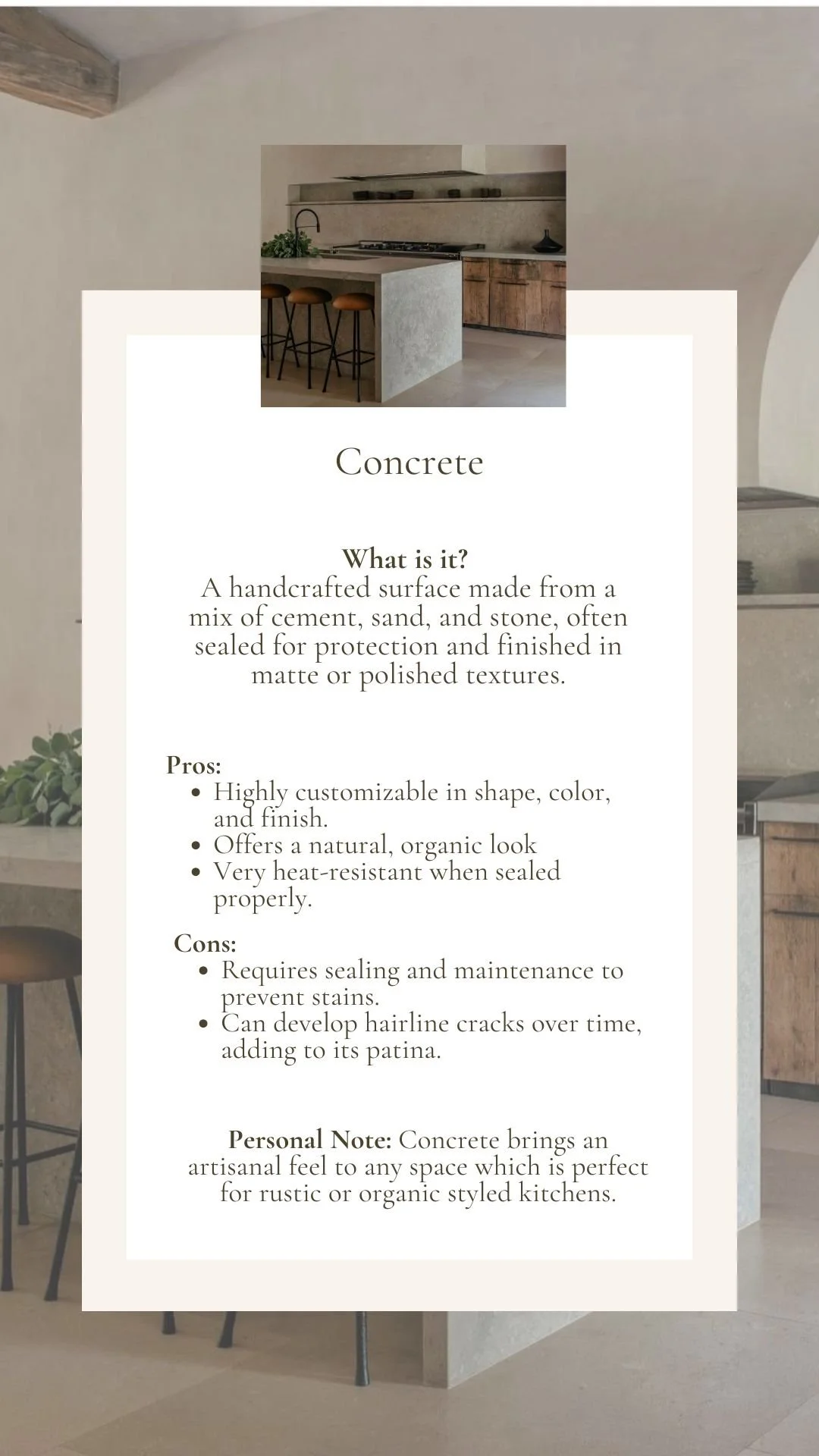
5. Concrete
For our more artisanal or organic-leaning projects, concrete is a showstopper. It’s handcrafted from a mix of cement, sand, and stone, and it can be poured into virtually any shape, offering a level of customization that’s hard to beat. Whether polished for a modern aesthetic or left matte for a rustic, natural vibe, concrete brings a textural richness to the space.
However, it’s not for everyone. It needs regular sealing to prevent staining, and over time, it can develop small hairline cracks — which many of my clients actually love for the added patina. I tend to recommend concrete in homes where we’re leaning into a more relaxed, natural design language and where the client embraces the idea of a surface that evolves with time.
Which Countertop Is Right for You?
There’s no one-size-fits-all answer when it comes to countertop materials and that’s exactly why working with a designer can make all the difference. I guide my clients through every consideration, from durability and maintenance to tone, texture, and how each surface supports the overall design vision. Whether you’re dreaming of a classic white kitchen, something earthy and layered, or a bold, contemporary statement, the right countertop material helps ground the entire space.
If you're building or renovating and want to make sure every detail — including your surfaces — is both beautiful and intentional, I’d love to help you make those decisions with clarity and confidence.
